
"coffee bean evolution"
900 article(s) found

The nutritional efficacy of coffee beans
Coffee is beneficial to urine and dehumidification. Caffeine can promote kidney function, expel excess sodium ions from the body, increase urine output, improve abdominal distension and edema, and help lose weight. Coffee is a staple appetizer. Caffeine stimulates the sympathetic nerve, stimulates stomach and intestines to secrete gastric acid, promotes evolution, prevents gastric distension and gastroptosis, and promotes gastrointestinal hormones and peristaltic hormones to facilitate rapid defecation. The beauty of coffee

Introduction of Nicaraguan Coffee Manor Los Congo Manor in Central Central America
Nicaraguan coffee is grown in fertile volcanic soil, and SHG is the best harvested from 1500 to 2000 meters above sea level. The local climate belongs to alpine terrain, which is surrounded by thick fog throughout the year and covers the whole mountain forest, resulting in a low-temperature and humid climate. Years of mating evolution of tree species, coupled with insisting on the ancient and time-consuming treatment process, retain natural acidity and strong aroma, and shade is used.

How many kinds of coffee do you know that are more precious than the Blue Mountains?
Coffee name: Napoleon Origin: British St. Helena (Saint Helena Island, the claustrophobic island where the hero Napoleon was exiled) Farm: Napoleon Farm Variety: Bourbon Coffee name: blue Elise (Elise Blue) Origin: French New Caledonia (New Caledonia Island) Farm: Caf Kua

Ethiopia-the birthplace of the famous Arabica coffee beans
Ethiopia is the birthplace of the famous Arabica coffee beans, and people have always maintained the tradition of harvesting wild coffee beans. The coffee garden at an altitude of more than 1500 meters has formed a unique coffee style after thousands of years of evolution and adaptation. Ethiopian coffee grown in the natural wild environment is called wilderness coffee, which retains the most primitive and natural taste of coffee beans.
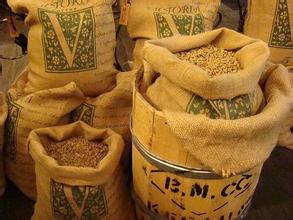
Djimmah, an Ethiopian coffee producing area, follows the ancient method to take the sun treatment class.
The coffee-producing region of Ethiopia is divided into east and west parts by the East African Rift Valley, with lakes, volcanoes, lowlands, plateaus and woodlands interlaced, each evolving. Ethiopia has the most diverse coffee ecosystem in the world (forest coffee, semi-forest coffee, pastoral coffee and plantation coffee), which also preserves its rich Arabica genes. The eastern half is mostly plateaus, coffee beans.

Organic coffee from Giant Turtle Island Galapagos Coffee
The quality of Galapagos coffee is very good, and it is mainly exported to Scandinavia and other Nordic countries, so our people know little about it. As coffee is consumed by people all over the world, the world coffee industry is also moving towards a mass production model. Small-scale planting models like the Galapagos actually limit its development. If the scale is not expanded, it is likely to end up with no profit.

Introduction of Ecuadorian coffee beans in Galapagos coffee flavor manor area
The quality of Galapagos coffee is very good, and it is mainly exported to Scandinavia and other Nordic countries, so our people know little about it. As coffee is consumed by people all over the world, the world coffee industry is also moving towards a mass production model. Small-scale planting models like the Galapagos actually limit its development. If the scale is not expanded, it is likely to end up with no profit.

Introduction to the flavor and taste of the boutique coffee manor in the alpine coffee producing area of Ecuador
Mr. Veniso, winner of the 2014 Ecuador Coffee Competition, told reporters that some of the Ecuadorian coffee is espresso made from Ecuadorian alpine coffee beans. This coffee comes from a mountain area about 1000 to 2000 meters above sea level and has a mellow taste with aromas and sweetness of fruit, grass and chocolate. Some add thin coffee from the Amazon region to this espresso.

Galapagos Coffee Flavor Flavor Manor introduction to Ecuadorian Coffee
The quality of Galapagos coffee is very good, and it is mainly exported to Scandinavia and other Nordic countries, so our people know little about it. As coffee is consumed by people all over the world, the world coffee industry is also moving towards a mass production model. Small-scale planting models like the Galapagos actually limit its development. If the scale is not expanded, it is likely to end up with no profit.

Evolution history of bean baking machine
At the beginning of the history of household roaster coffee, there were only household bean baking utensils in the world. These bean baking utensils were standard accessories in ordinary people's kitchens until the early 20th century. 16th century: the simple construction tool of the Iraqi baking pot is to move the pot to a small fire or a heat source on a coal fire.
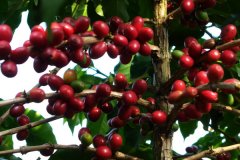
Ethiopian Yega Chevy Fine Coffee
The coffee-producing region of Ethiopia is divided into east and west parts by the East African Rift Valley, with lakes, volcanoes, lowlands, plateaus and woodlands interlaced, each evolving. Ethiopia has the most diverse coffee ecosystem in the world (forest coffee, semi-forest coffee, pastoral coffee and plantation coffee), which also preserves its rich Arabica genes. The eastern half is mostly plateaus, coffee beans.

Fruit acid Bright Ethiopian coffee estate producing area Flavor Taste characteristics Variety Brand introduction
Ethiopia's coffee-producing areas are divided into east and west parts by the Great Rift Valley. Lakes, volcanoes, lowlands, plateaus and woodlands alternate and evolve independently. Ethiopia has the most diverse coffee ecosystem in the world (forest coffee, semi-forest coffee, pastoral coffee and plantation coffee), which also allows it to preserve its rich Arabica genes. The eastern half is mostly plateau, coffee bean mouth

Fragrant coffee flavor description of Hassanda Coffee Garden in Ecuador
The coffee beans produced in Ecuador's Galapagos Islands are organic coffee beans, thanks to the unique ecological environment such as volcanic soil and microclimate, coupled with the fact that they do not use any chemical fertilizers or pesticides, they are recognized as natural green boutique coffee. this naturally grown coffee has a mild taste with a hint of flowers and fruit and caramel. It is understood that the Galapagos Islands are far from Eritrea.

What is the Italian style of the three waves of coffee in the world
The world's three major waves of coffee evolution three waves of coffee what is the wave of Italian coffee, can be said to be a revolution. It is precisely because the market is now filled with a large number of products that fail to restore the quality of coffee, confusing the public's correct understanding of coffee, leading to the emergence of a group of advocates who really love high-quality coffee. They insist on providing fine coffee and spread authentic coffee culture.

Introduction to the flavor and taste of Galapagos Coffee Manor San Cristobal
The quality of Galapagos coffee is very good, and it is mainly exported to Scandinavia and other Nordic countries, so our people know little about it. As coffee is consumed by people all over the world, the world coffee industry is also moving towards a mass production model. Small-scale planting models like the Galapagos actually limit its development. If the scale is not expanded, it is likely to end up with no profit.

Santa Cruz Manor Coffee Manor Variety Flavor and Taste characteristics introduction of Fine Coffee beans
Ecuadorian coffee exports fell for the third year in a row. In recent years, the Latin American coffee industry has been plagued by coffee leaf rust (CoffeeRoya), and Ecuador has not been spared. Since 2012, coffee bean exports have lost a total of US $20 million, with exports of US $28.8 million, US $14.8 million and US $9.7 million respectively in the first five months of the past three years, with an annual decline of between 30 and 40 per cent.

Ecuadorian coffee flavor description, Ecuadorian coffee introduction
Following Cafe (official Wechat account vdailycom) found that Beautiful Cafe opened a small shop of its own Ecuador is the highest Arabica coffee plantation in the world. Since the coffee tree was first introduced into Ecuador in 1875, the quality of its coffee has remained unchanged for 100 years, especially the coffee harvested in early June every year, which is known as the best coffee in the world. Ecuadorian coffee
This cafe makes baristas more professional.
In some cafes, do baristas not only make coffee, but also occasionally act as cashiers or waiters? Baristas used to be a profession, but with the evolution of market demand, baristas have to deal with more and more things. Cuppachoice Cafe, located in oxcart water, is committed to sharing coffee culture and improving the professional standard of baristas in our country. Located
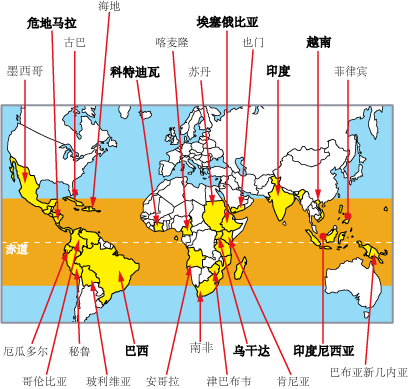
Ethiopian coffee producing areas Ethiopian coffee producing areas are Hilda Moharal and Yega Xuefei.
Ethiopia's coffee-producing areas are divided into east and west parts by the Great Rift Valley. Lakes, volcanoes, lowlands, plateaus and woodlands alternate and evolve independently. Ethiopia has the most diverse coffee ecosystem in the world (forest coffee, semi-forest coffee, pastoral coffee and plantation coffee), which also allows it to preserve its rich Arabica genes. The eastern half is mostly plateau, coffee beans

Introduction to the characteristics of Ecuadorian Coffee Flavor description and Grinding degree treatment
The Arabian Coffee Tree was first introduced to Ecuador (Ecuador) in 1952 and its coffee is of good quality, especially the coffee harvested in early June. Ecuadorian coffee beans can be divided into two varieties: Galapagos and Gigante, both of which have the characteristics of large granules and heavy weight. Ecuadorian coffee can be divided into first class (No.1) and super excellent (ExtraSuperior) according to its quality.